Brutalist Museums in Berlin
Berlin, GermanyArchitecture · Urban
A fashion editorial needing raw concrete texture and hard, directional light.
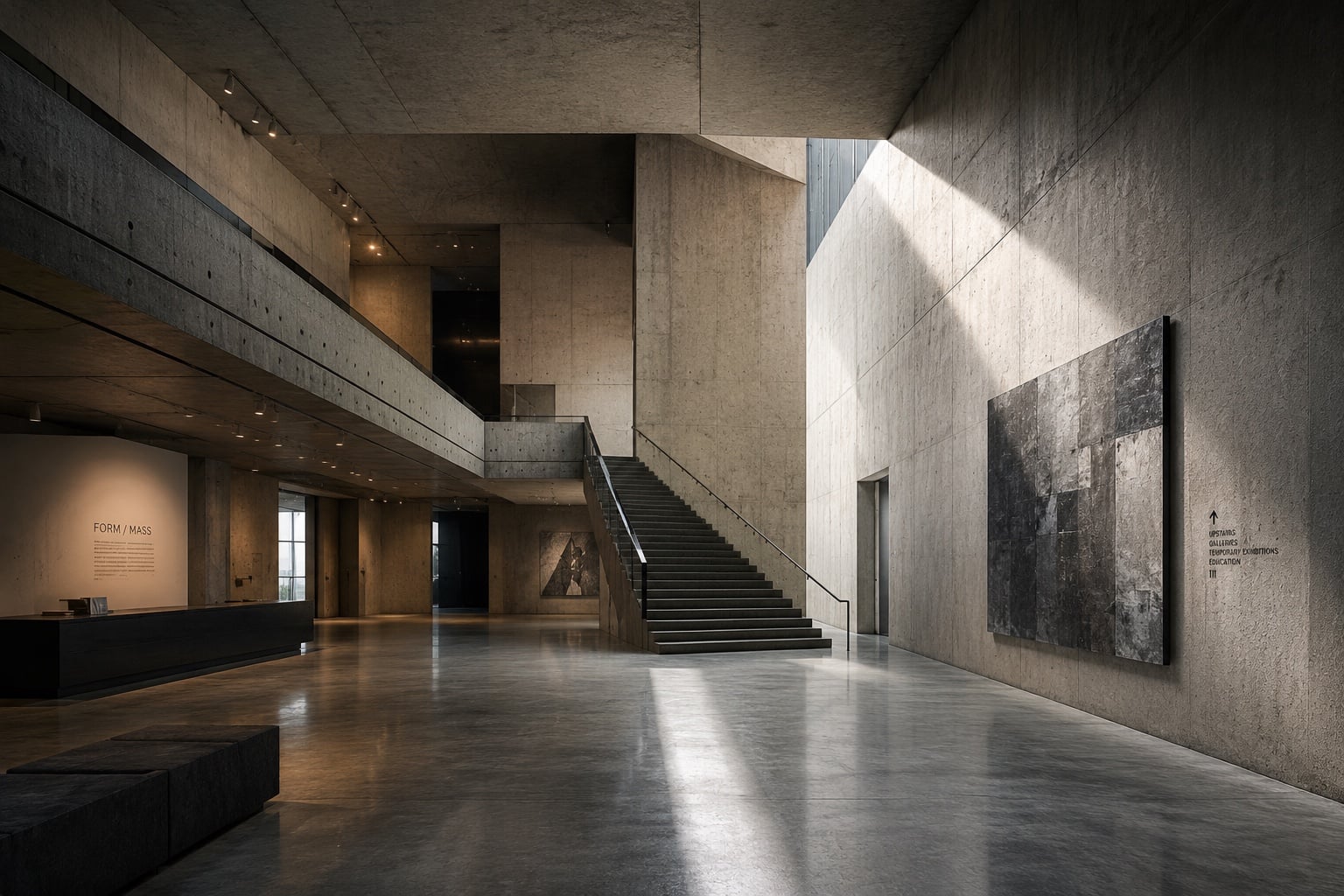
Mid-century brutalist museums and cultural centers with board-formed concrete, deep overhangs, and open plazas — chosen for graphic shadow and controllable foot traffic.
Report overview
Shoot-readiness
Strong for stills and small crews. Public plazas are easy; interior shoots hinge on a filming permit and quiet timing.
Best shooting window
Clear weekday mornings, 9–11am, for hard façade light and thin crowds.
Main visual opportunity
Board-formed concrete in raking side-light — graphic shadow with almost no set dressing.
Biggest production risk
Interior filming permission. Tripods, lighting, and crews are routinely restricted near artworks.
Location intelligence
Confidence reflects the strength and consistency of available source evidence. Local rules and access conditions should still be confirmed before production.
Light
High confidenceBrutalist façades read best when low, hard light rakes across the board-formed texture; flat light erases it.
- East façades catch hard side-light roughly 10–11am; west façades in late afternoon.
- Overcast flattens the concrete — favor clear skies for texture.
- Main halls are usually skylit: shootable without a kit at midday, dim by late afternoon.
- Deep overhangs create strong shadow pockets — meter for highlights to keep the texture.
Camera angles
High confidenceThe appeal is geometry — repeated forms, ramps, and cantilevers. Shoot for lines, not just walls.
- Staircases and ramps give leading lines and elevation changes.
- Cantilevers and overhangs frame talent against shadow.
- Wide lenses exaggerate the mass; longer lenses compress repeated columns.
- Plazas give clean low-angle hero shots against open sky.
Access
Medium confidencePlazas are public and easy; interiors mean coordinating with the institution and moving gear through visitor entrances.
- Street parking is limited — nearest service load-in is usually a block or two away.
- Most interiors require carrying gear through public entrances; no vehicle access inside.
- Step-free routes and elevators vary — check before shooting upper levels.
- Plan a compact kit; large stands draw security attention indoors.
Permits
Verify locallyHandheld and phone work is usually tolerated; anything that looks like a production needs written permission. Treat any rule of thumb as a starting point and verify locally.
- Tripods, lighting, and crews typically need a filming permit from the museum.
- Public plazas may still fall under city or property filming rules.
- Image rights on displayed artworks can restrict what you publish — ask before shooting pieces.
- Confirm in writing; a verbal “should be fine” is not a permit.
Crowds
Medium confidenceFoot traffic swings hard by day and by programming, and the quiet window is narrow.
- Weekday mornings right after opening are quietest.
- Avoid first-Sunday free-entry days and blockbuster exhibitions.
- School groups cluster late morning — finish hero frames early.
- Lobbies and cafés stay busy; shoot circulation spaces off the main route.
Weather
High confidenceExterior texture depends on sun; interiors are largely weatherproof, which makes them a strong rain backup.
- Clear days give the hard shadow the look depends on.
- Skylit halls hold up in overcast and rain — a reliable cover set.
- Cold months mean short daylight; plan façade shots before midday.
- Wind funnels through open plazas — secure light fabrics.
Production checklist
Before you go
- Email the institution for filming permission and confirm it in writing.
- Check opening hours and any special exhibitions or free-entry days.
- Scout the east/west façade orientation against your shoot date’s sun path.
- Plan a compact, low-profile kit for interiors.
On arrival
- Shoot exterior hard-light frames first while the window holds.
- Check in with front-of-house security before setting up indoors.
- Keep clear of hung artworks and respect no-flash zones.
- Identify the skylit halls as your overcast fallback.
Backup plan
- If interior permission falls through, the public plaza carries the look.
- Overcast? Move to skylit halls for texture without sun.
- Crowded? Switch to circulation spaces — stairs and ramps off the main route.
Related examples
Scout a location for your production
Describe the shoot, constraints, and production requirements, and ScoutHalo returns real locations — each with its own production-ready Scout Report.